
Storefront Door Won’t Latch in Boulder? A Commercial Winter Checklist
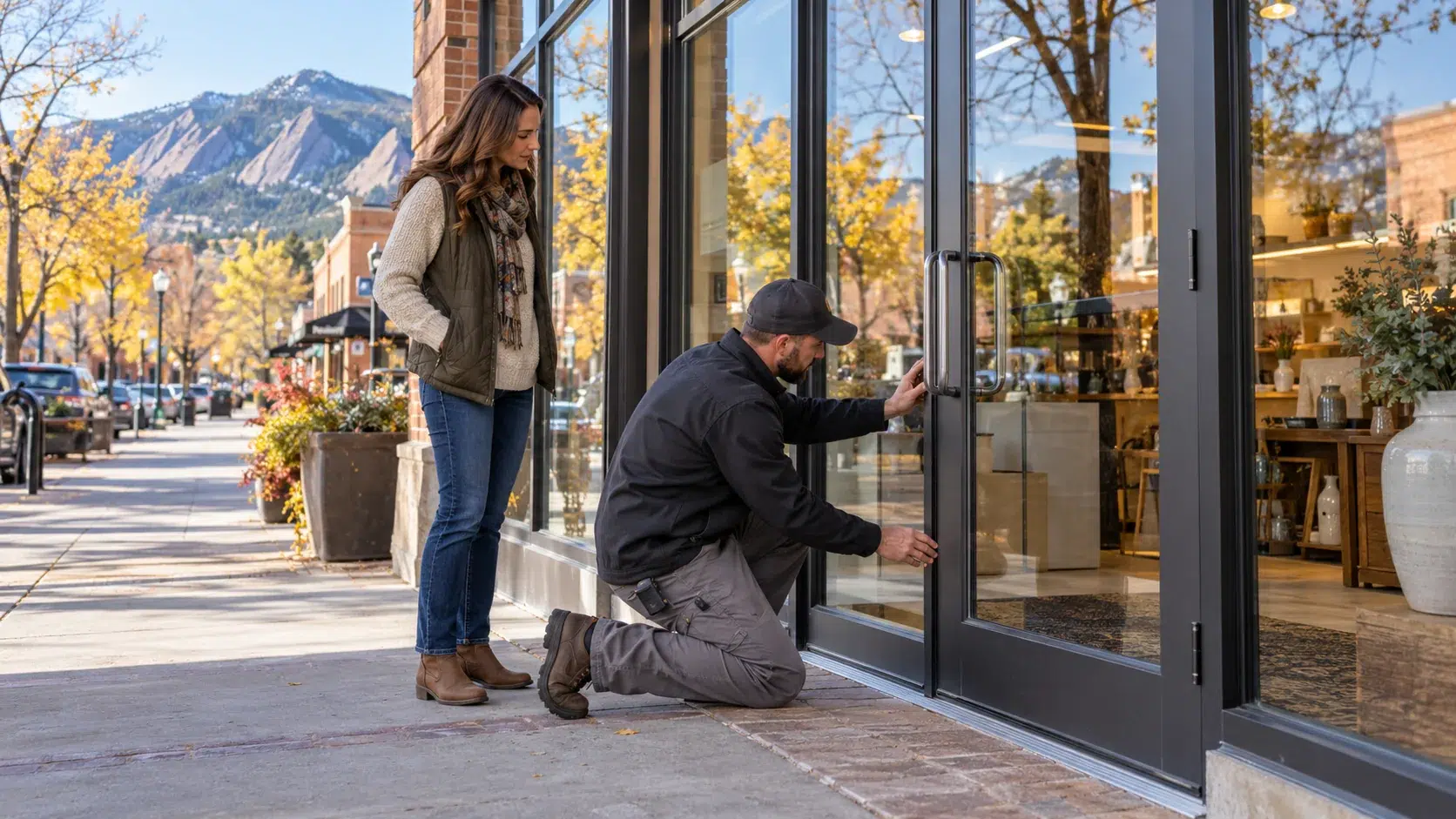


A storefront door that closes but does not latch is not always a lock failure. In Boulder’s fall temperature swings, an aluminum entrance can bind because the closer is underperforming, the door has shifted at the pivots or hinges, the weather seal is dragging, debris is holding the threshold, or the latch no longer meets the strike cleanly.
If a commercial door won’t latch in Boulder, keep the opening attended, remove loose debris, and watch one complete closing cycle without forcing the door. Note where it slows, rubs or stops. Do not tape a latch back, disable panic hardware, increase closer force at random or leave an occupied business with an unreliable egress door.
This checklist is for observation and routine housekeeping. Fire-rated openings, glass storefront systems, access-controlled doors and required exits should be serviced by qualified professionals familiar with the complete opening.
| What happens | Likely area to inspect | Why it matters |
|---|---|---|
| The door stops several inches from the frame | Closer, wind, hinge or pivot friction | The latch never reaches the strike |
| The door reaches the frame but bounces open | Closer latch speed, seal pressure or strike position | The final closing movement is not completing |
| The latch hits above or below the strike | Door sag, pivots, hinges or frame movement | Changing only the lock may not correct alignment |
| The door works when lifted or pulled | Alignment and worn support hardware | Extra force is masking a mechanical condition |
| The reader accepts a credential but the door stays shut | Electric strike, latch pressure or control timing | Electronic approval and mechanical release are separate |
| The panic bar sticks or does not reset | Exit device, door alignment or debris | Egress and relatching may both be affected |
A commercial locksmith service should assess the cylinder, latch, strike, closer, hinges or pivots, threshold and access-control hardware as one door system. Replacing a cylinder will not straighten a sagging opening, and adjusting the strike will not repair a failing closer.

Boulder entrances can move through strong sun, overnight freezes, snow, wind and rapid temperature changes in a short period. Aluminum frames, glass doors, seals and surrounding construction respond differently. A door that latched with a light push in September may lose the final fraction of clearance when seals stiffen or the threshold collects grit and ice.
Weather does not excuse an unreliable door; it helps identify the condition. If the same opening fails only during cold mornings or strong west winds, document that pattern. A technician can then evaluate closer performance, sweep and weather-strip pressure, alignment and the latch-to-strike relationship under the conditions that trigger the failure.
The door should travel smoothly from the open position toward the frame. A sudden slowdown may point to closer performance, wind pressure, a dragging sweep, a bent arm or friction at hinges and pivots.
The last few degrees must overcome seal pressure and place the latch in the strike. If the door stops just short, increasing force is not automatically the answer. Too much force can create accessibility, wear and safety problems.
After the door closes, confirm that it is actually secured. Pull gently from the unsecured side without operating the handle. A door can appear closed while the latch rests against the strike instead of entering it.
If the opening needs mechanical correction, the site’s commercial door and lock repair information explains why the lock, frame and closing hardware should be evaluated together.
Start with housekeeping that does not alter the hardware. Remove leaves, gravel and deicing material from the threshold. Confirm that an entry mat lies flat and does not curl into the door path. Brush away snow before it compacts, then dry standing moisture that could refreeze.
Look for a torn sweep, folded gasket or seal that has pulled away from the frame. Do not cut or remove a seal simply to make the door close. The opening may have energy, smoke, fire, water or accessibility requirements that depend on the correct component and installation.

City of Boulder building codes and regulations provide the official framework for local building and fire requirements. The correct requirement depends on the occupancy, door, approved plans and current code; business owners should use city guidance and qualified professionals for project-specific decisions.
Operationally, an egress door should open from the occupied side as designed, then close and relatch without employees improvising around the hardware. Never chain, block or tape back a required exit device. If panic hardware does not release smoothly, does not reset or prevents relatching, keep the issue on an urgent service track and follow the property’s fire-safety procedures.
A green reader or audible click confirms only part of the sequence. The controller may send the correct command while pressure on the latch prevents an electric strike from releasing. The door may also unlock but fail to close and relock after the user enters.
Record the credential result, sound, timing and physical door movement. Check whether the problem affects every credential and whether mechanical key operation is normal. A technician can then separate a power, wiring or controller issue from a latch, strike or alignment problem without guessing.
Repair is often appropriate when the hardware is serviceable and the problem is alignment, adjustment or a replaceable worn component. Replacement may be better when the device is damaged, corroded, incompatible with the door, repeatedly unreliable or no longer supported.
A commercial lock change can address a defective or unsuitable lock, but it should not be used to hide a closer or frame problem. If a door cannot secure after hours or a required exit will not operate correctly, review the emergency locksmith service and keep the opening attended until the property has a safe plan.
Once the mechanical opening is reliable, review who has keys and which credentials remain active. Employee turnover, lost keys and undocumented duplicates create a separate security risk. A documented key duplication process helps prevent untracked copies and makes later rekeying decisions easier.
The door is probably not completing its closing cycle or the latch is not meeting the strike cleanly. Common areas include closer performance, seal pressure, threshold interference, hinge or pivot wear and alignment. Pulling the door masks the condition rather than fixing it.
Cold can stiffen seals and closer fluid, while snow, grit or ice can obstruct the threshold. Temperature changes can also expose an alignment problem that was already developing. The correct repair depends on the full opening, not temperature alone.
Not until the reason for the mismatch is known. Moving the strike may hide door sag or closer trouble and can reduce secure engagement. Fire-rated, egress and access-controlled openings need qualified evaluation.
The system may be authorizing the credential while latch pressure, strike alignment, a failed electric strike or control timing prevents release. Record the exact sequence and have both the electronic and mechanical sides tested.
Do not prop, tape or disable a required security, fire or egress door. Follow the property’s safety procedure, keep an affected entrance attended and obtain professional service. The correct temporary plan depends on the opening and occupancy.
Treat it as urgent when the business cannot secure, a required exit does not operate as designed, glass or hardware is loose, access control traps or blocks users, or the door may injure someone. Do not leave an unreliable opening unattended.
A Boulder storefront door that will not latch needs a whole-opening diagnosis. Observe the sweep and latch phases, clear the threshold, document weather patterns and confirm egress hardware resets. Then repair the cause—closer, alignment, seal, strike, latch or access-control coordination—instead of forcing the door or replacing a good lock.