
Key Not Detected in Denver? What to Check Before Replacing Your Car Key
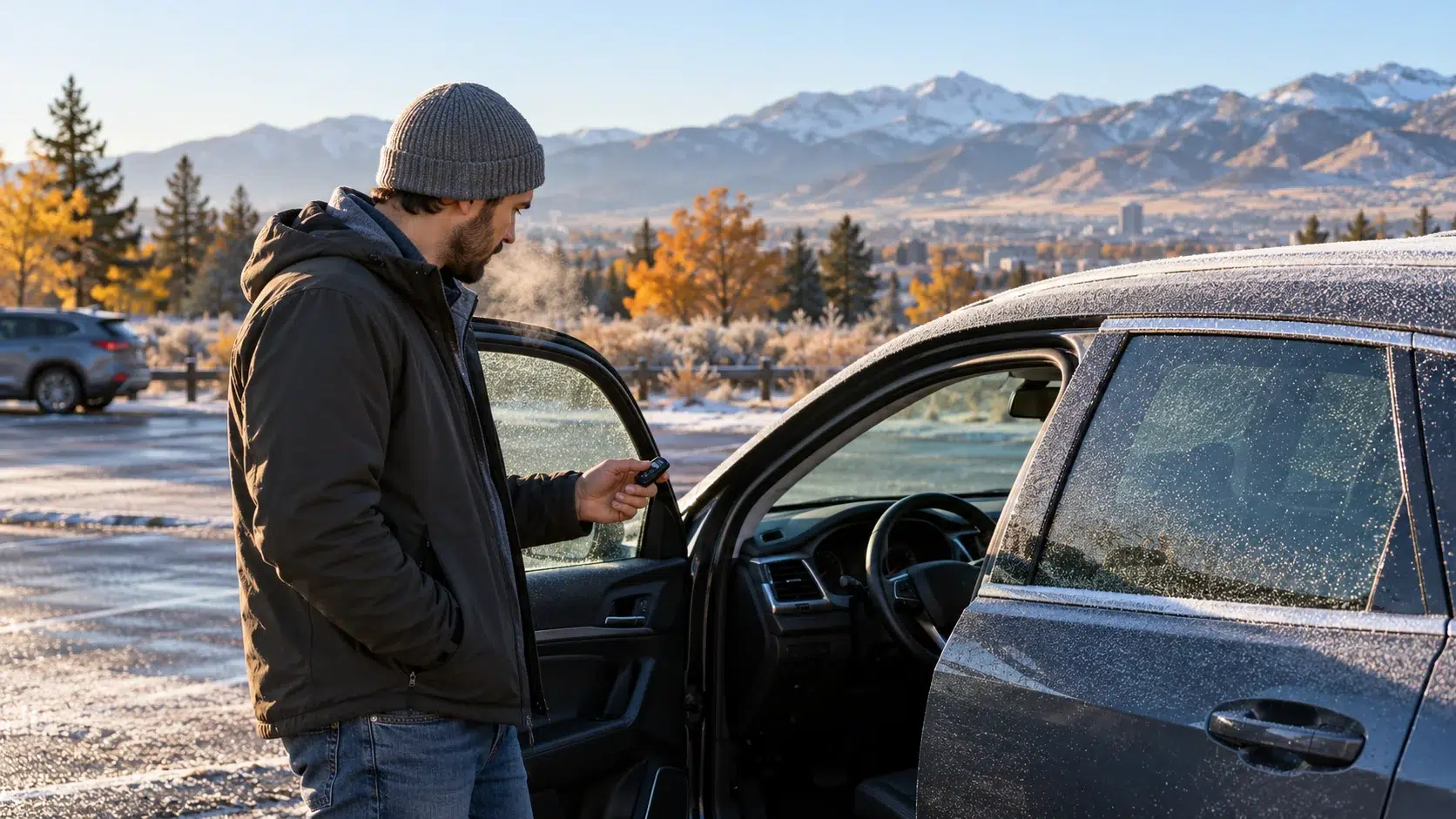


A “Key Not Detected” message does not automatically mean the car key has lost its programming. On a cold Denver morning, the cause may be a weak coin-cell battery in the fob, a low 12-volt vehicle battery, interference inside the cabin, or a fault in the vehicle’s receiver or immobilizer system.
If your vehicle reports key not detected in Denver, start with the least invasive checks: move the fob away from phones and other electronics, try the spare key, use the manufacturer’s documented backup-start position, and compare the vehicle’s other electrical symptoms. Do not pry open the steering column, repeatedly jump the car, or buy a replacement fob before the fault is identified.
These are general checks, not a substitute for the instructions for your year, make and model. Hybrid, electric and high-security vehicles may have additional shutdown and service procedures.
| What you notice | More likely area | Useful next check |
|---|---|---|
| One fob fails but the spare works normally | Fob battery, buttons or internal fob fault | Test the battery and inspect the case and contacts |
| Both fobs fail in the same place | Vehicle receiver, interference or vehicle battery | Move electronics away and assess the car’s other electrical systems |
| The doors unlock, but push-button start says no key | Interior detection antenna, backup-read procedure or immobilizer issue | Use the documented backup-start position |
| The dash is dim or the starter clicks | Weak 12-volt vehicle battery | Have the vehicle battery and charging system tested |
| The problem began after a coin-cell change | Wrong battery, reversed battery or displaced contact | Recheck the specified battery and installation |
| A lost key still appears in the vehicle’s memory | Key-control concern | Ask whether the lost credential can be removed during programming |
A Denver automotive locksmith can test the key, verify compatibility and determine whether programming is actually required. That distinction matters: replacing a good fob will not repair a weak vehicle battery or a failed antenna.

Cold weather often reveals a battery that was already close to failure. The fob’s coin cell must power a short radio exchange, while the vehicle’s 12-volt battery must wake control modules, authenticate the key and support starting. Either battery can be weak, and the dashboard message alone may not identify which one.
AAA’s guidance on cold-weather vehicle batteries notes that a typical battery is only about 65% efficient at 32°F. That is a reason to test the vehicle battery when several electrical systems act weak—not proof that every “key not detected” warning is a bad car battery.
A fob kept in an outside pocket or left in a cold vehicle may recover temporarily when warmed to room temperature. Temporary recovery still deserves attention; it suggests the battery or an internal connection is marginal rather than permanently fixed.
Look up the exact battery type and opening method in the owner’s manual. Coin cells that look similar can have different dimensions or specifications. Open the case only at the designated seam, keep track of the gasket and emergency key, and avoid touching the flat faces of the new cell more than necessary.
After installation, confirm polarity, make sure the contacts are not flattened, and close the case evenly. If you prefer not to open the fob, a key-fob battery replacement service can test the cell and inspect the housing. A battery change normally does not erase programming, but procedures vary and damage to the board or contacts can prevent operation.
Programming is appropriate when a compatible new key must be introduced, a repaired key has lost authorization, or the vehicle’s key list needs to be updated. A qualified technician should first verify the vehicle identification, ownership authorization, key type and supported procedure.
Car-key fob programming is not a universal cure for a dead coin cell, damaged button, weak vehicle battery, receiver fault or wiring problem. A useful diagnosis separates radio remote functions, passive key detection, immobilizer authorization and mechanical emergency-key operation instead of treating them as one system.

Call an automotive locksmith when you need an authorized entry, a compatible replacement key, key cutting, fob testing or supported programming. A mobile technician is especially useful when the vehicle cannot be moved. If the key is locked inside rather than undetected, use a professional car unlock service instead of pulling the window frame or using improvised tools.
A repair shop is the better route for a failing 12-volt battery, charging-system problem, damaged wiring or a no-start condition unrelated to key authorization. A dealership may be required for restricted components, security campaigns, warranty work or model-specific software. Good service starts with identifying the fault, not choosing the most expensive part.
A missing fob is a key-control issue. Record which key is missing, gather proof of ownership and ask whether the lost credential can be removed from the vehicle’s active key list. Simply creating another key may restore convenience while leaving the lost key authorized.
If you still have one working key, arranging a documented car-fob duplicate before the last key fails can reduce downtime. Store the spare securely, test it periodically and keep its mechanical emergency key with it.
Yes, cold weather can expose a weak fob battery or a weak vehicle battery. It can also coincide with moisture or an intermittent connection. The message identifies a detection problem, not the failed component, so compare the spare key and the vehicle’s other electrical symptoms.
Remote unlocking and passive in-cabin detection may use different antennas and procedures. Use the owner’s manual’s backup-start method. If a known-good spare behaves the same way, the vehicle side of the system needs diagnosis.
Usually a routine coin-cell replacement does not erase key authorization, but designs vary. If the fob stops working immediately afterward, first check the battery type, polarity, contacts and case assembly before assuming programming was lost.
Many vehicles provide a backup detection point that can read the fob at close range, but the location and procedure are model-specific. Follow the owner’s manual rather than trying random positions around the steering column.
Dim lights, rapid clicking, slow cranking, resetting electronics or several unrelated warnings point toward low vehicle voltage. A battery and charging-system test is more useful than replacing another fob battery.
Ask whether your vehicle supports removing the lost credential from its active key list. That may prevent the missing fob from starting the vehicle. The technician will need to verify ownership and the keys that should remain authorized.
“Key Not Detected” is a symptom, not a parts order. Compare the spare, separate the fob from interference, use the documented backup-start point and check for broader low-voltage signs. Once the fault is isolated, the correct next step may be a coin cell, vehicle-battery service, key repair, programming or vehicle-side electrical diagnosis.